What is Quick Commerce?
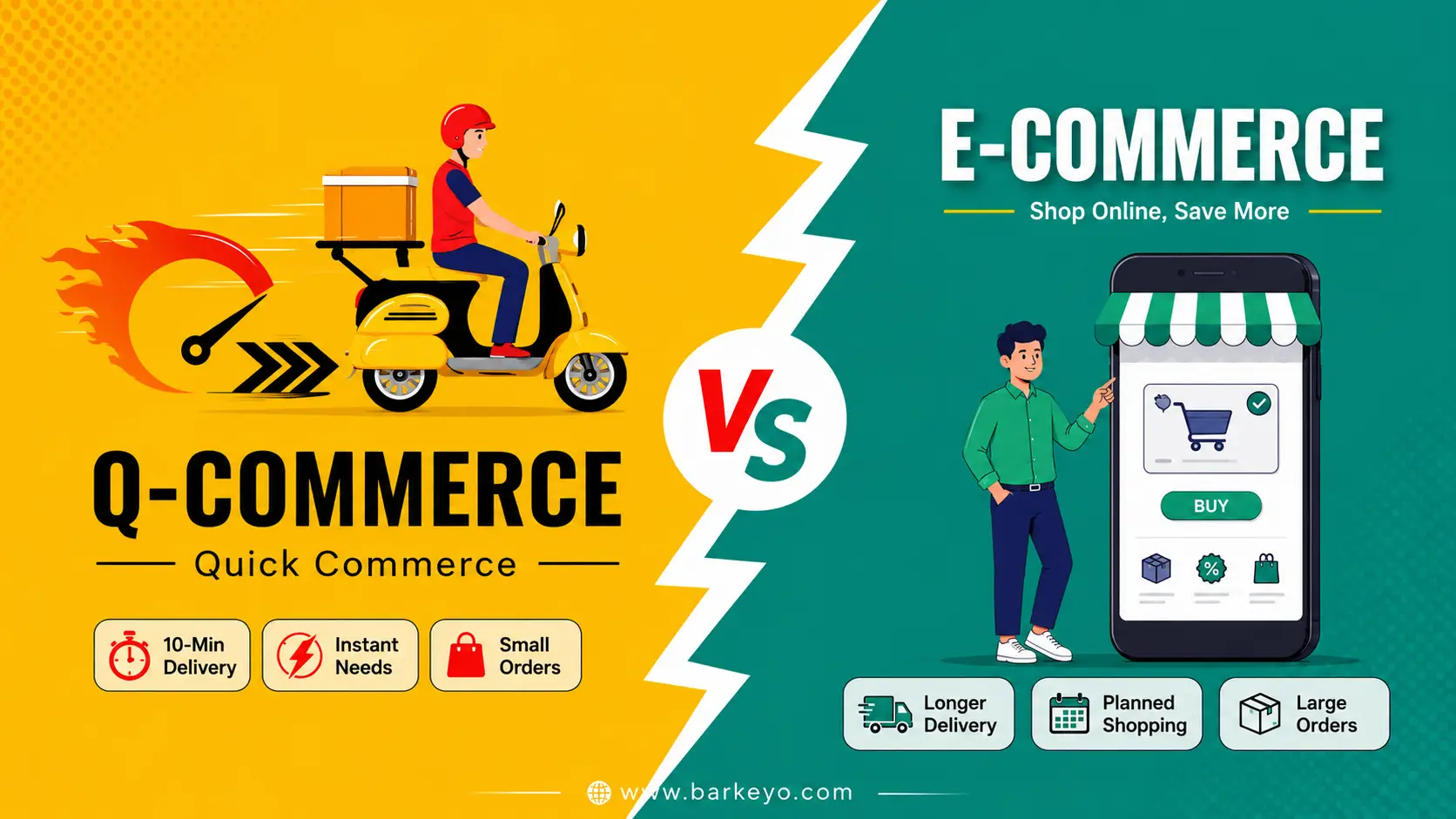
Quick Commerce — often called "online shopping on steroids" — is about delivering groceries, snacks, and medicines in 10 to 30 minutes. Companies like Blinkit, Zepto, and Swiggy Instamart use small warehouses called "dark stores" placed at key urban locations to ensure speedy deliveries within a limited radius.
Initially sceptical, the Q-Commerce model gained mainstream traction during the COVID-19 pandemic and through advancements in logistics technology. Today, services like Blinkit and Zepto also deliver higher-value items like electronics, cakes, and even jerseys within hours.
Key Features of Quick Commerce
- Speed: Delivery in 10–30 minutes.
- Narrow Product Basket: Mainly essentials — flour, pulses, rice, snacks, and medicines.
- User Convenience: Designed to solve instant needs and unexpected purchases.
What is E-Commerce?
E-Commerce is the older, tried-and-tested model with giants like Amazon and Flipkart offering a massive range of products — electronics, fashion, groceries, books, and more. It capitalizes on wide selection and competitive prices, leveraging extensive warehouses and regional supply chains to deliver orders in 1–5 days.
E-Commerce has been at the heart of online shopping since the early 2000s and fundamentally changed how Indian consumers spend money on consumer goods — from household items and apparel to electronics.
Key Features of E-Commerce
- Wide Selection: Basket spans basic needs to niche high-end items.
- Competitive Pricing: Heavy discounts and deals for budget-conscious consumers.
- Standard Delivery: Usually 1–5 days, with faster options available at extra cost.
Quick Commerce vs E-Commerce: A Detailed Comparison
| Aspect | Quick Commerce | E-Commerce |
|---|---|---|
| Speed of Delivery | 10–30 minutes | 1–5 days |
| Product Range | Limited to essentials | Extensive variety |
| Pricing | Higher due to convenience | Competitive, with discounts |
| Logistics | Dark stores, small radius | Large warehouses, national reach |
| Target Audience | Urban, time-sensitive users | Broader demographic |
Business Models: How Do They Make Money?
E-Commerce
- Bulk purchases: Buying goods in bulk at lower costs.
- Marketplace model: Allowing third-party sellers to list products and earning commissions.
- Advertising: Charging sellers for visibility on their platforms.
Quick Commerce
- Dark stores: Stocking fast-moving goods close to the customer.
- Premium pricing: Charging slightly higher for speed and convenience.
- Data optimization: Using purchase patterns to stock the right products and drive repeat purchases.
The Future of Quick Commerce and E-Commerce
The Indian market could be heading toward a hybrid model in 2025. Quick Commerce is poised to penetrate Tier-2 and Tier-3 cities, while E-Commerce giants like Amazon and Flipkart are expected to introduce faster delivery options to compete head-on.
Key trends to watch include Q-Commerce branching into new product categories, E-Commerce optimizing for speed, and DTC (Direct-to-Consumer) brands like LG and Nike building their own websites — bypassing both platforms entirely.
Tips for Small Businesses to Survive
- Build trust: Maintain strong relationships with loyal local customers.
- Offer personalized services: Provide credit or custom orders for regular customers.
- Embrace technology: Use a basic CRM to track customer preferences and order history.
- Offer local delivery: Deliver products within a small radius to stay competitive.
- Be active in the community: Engage with local clubs and events to build a personal connection.
Conclusion
The tussle between Quick Commerce and E-Commerce is shaping the future of shopping in India. Q-Commerce offers speed and convenience but lacks variety and cost-efficiency. In contrast, traditional E-Commerce excels in breadth and value. Small businesses must evolve by leveraging their core strengths — local trust, personalization, and community — to remain relevant in this rapidly changing landscape.