In 2024, inside a Mumbai boardroom, something quietly broke.
The company had everything going for it. A successful IPO. ₹1,800 crore raised. Founders who had become celebrities after appearing on Shark Tank. By every external measure, this was a victory lap moment.
But one slide in that board meeting changed the mood entirely.
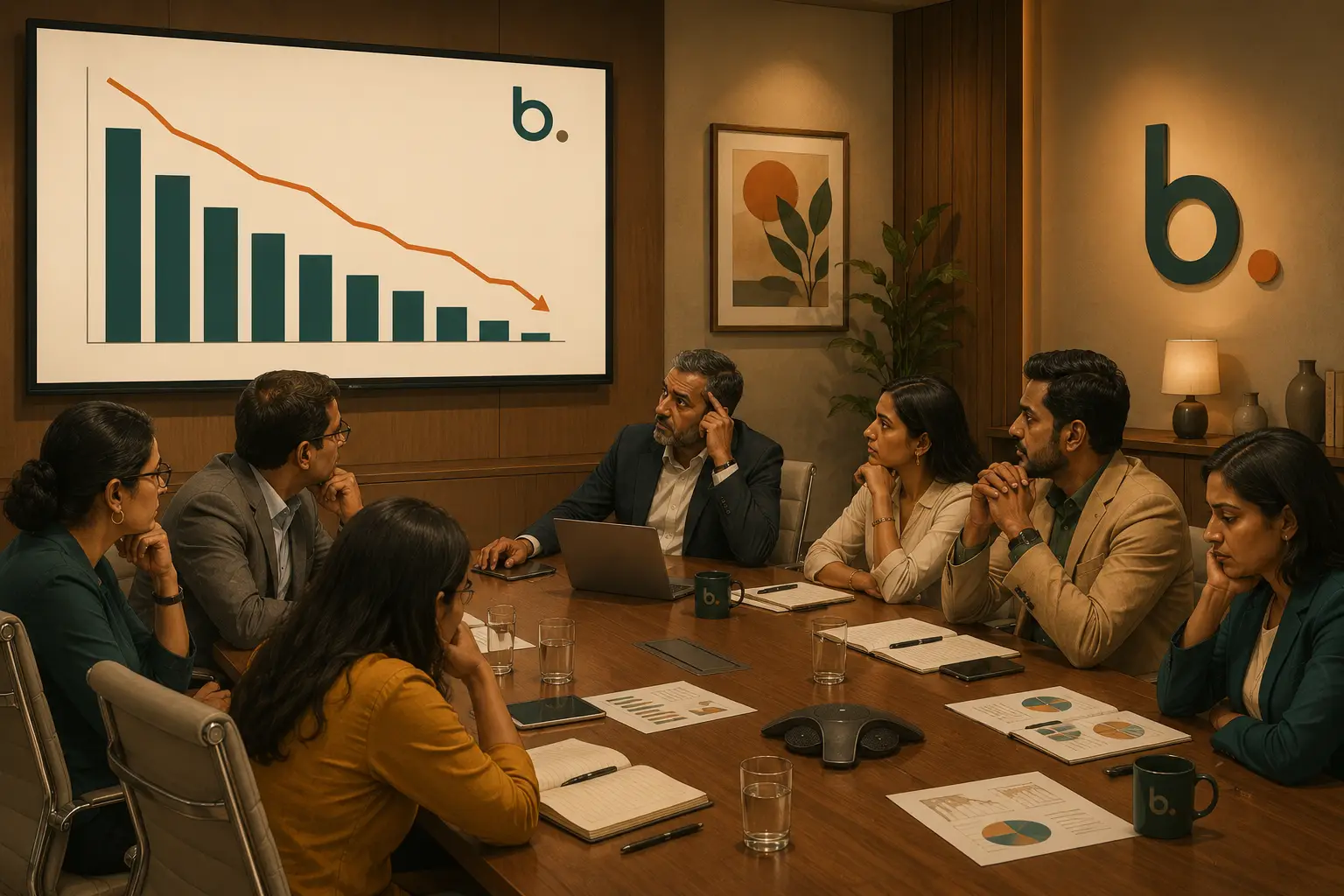
Distributors across Maharashtra and Goa were sitting on 90 days of unsold inventory. In a healthy business, that number should be 30 days. The brand's growth rate — once a confident 60–70% — had collapsed into single digits. Something in the distribution model had quietly cracked under the weight of the company's own ambition.
The founder made a decision that surprised the entire D2C industry. Instead of doubling down on digital or spinning a positive story for investors, they stood up and said: our distribution model is broken.
That brand was Mamaearth. And what followed — Project Neev — became one of the most honest pivots in Indian startup history.
The pivot nobody talks about enough
Project Neev wasn't a rebrand or a marketing refresh. It was a complete reset of Mamaearth's offline distribution network. Super stockists were removed. The brand directly connected with over 1 lakh outlets itself, eventually reaching 2.7 lakh outlets through their distribution system. Within a year, offline growth hit 25%.
By Q3 of FY26, the results were visible on paper. Revenue crossed ₹601 crore. Profit grew by 92%. And 35% of total sales were now coming from offline channels — the same channel they had once treated as secondary.
The lesson? Even a brand famous enough to have its founders on national television, even one that has successfully completed an IPO, could not survive on digital alone.
If that's true for Mamaearth, what does it mean for the thousands of smaller D2C brands still betting everything on Instagram ads?
The data that should make every D2C founder uncomfortable
In April 2026, Unicommerce released a report analysing 400 million orders across 6,000 D2C brands over 23 months. The finding that stopped people mid-scroll: 66% of all new D2C orders were coming from Tier 2 and Tier 3 cities.
Not just order volume — incremental GMV. Real sales growth. And it was coming from Indore, Surat, Coimbatore, Lucknow, Patna, Jaipur, Bhopal, Kanpur — cities that most founders still treat as afterthoughts.
Internet penetration in these cities has crossed 70%. Household income has grown by over 40% in the last few years. These aren't value-hunting consumers looking for the cheapest option. These are aspirational buyers willing to pay for quality — and right now, they're largely being ignored by the brands that could serve them.
The competitor who moves into these markets first doesn't just win customers. They build loyalty in a space that is, right now, almost entirely uncontested.
Lenskart's 11-year lesson for today's founders
Back in 2010, Peyush Bansal started Lenskart with a clear thesis: sell glasses online, cut out the middlemen, build a high-margin business. By 2015, he had learned something uncomfortable — online alone wasn't enough.
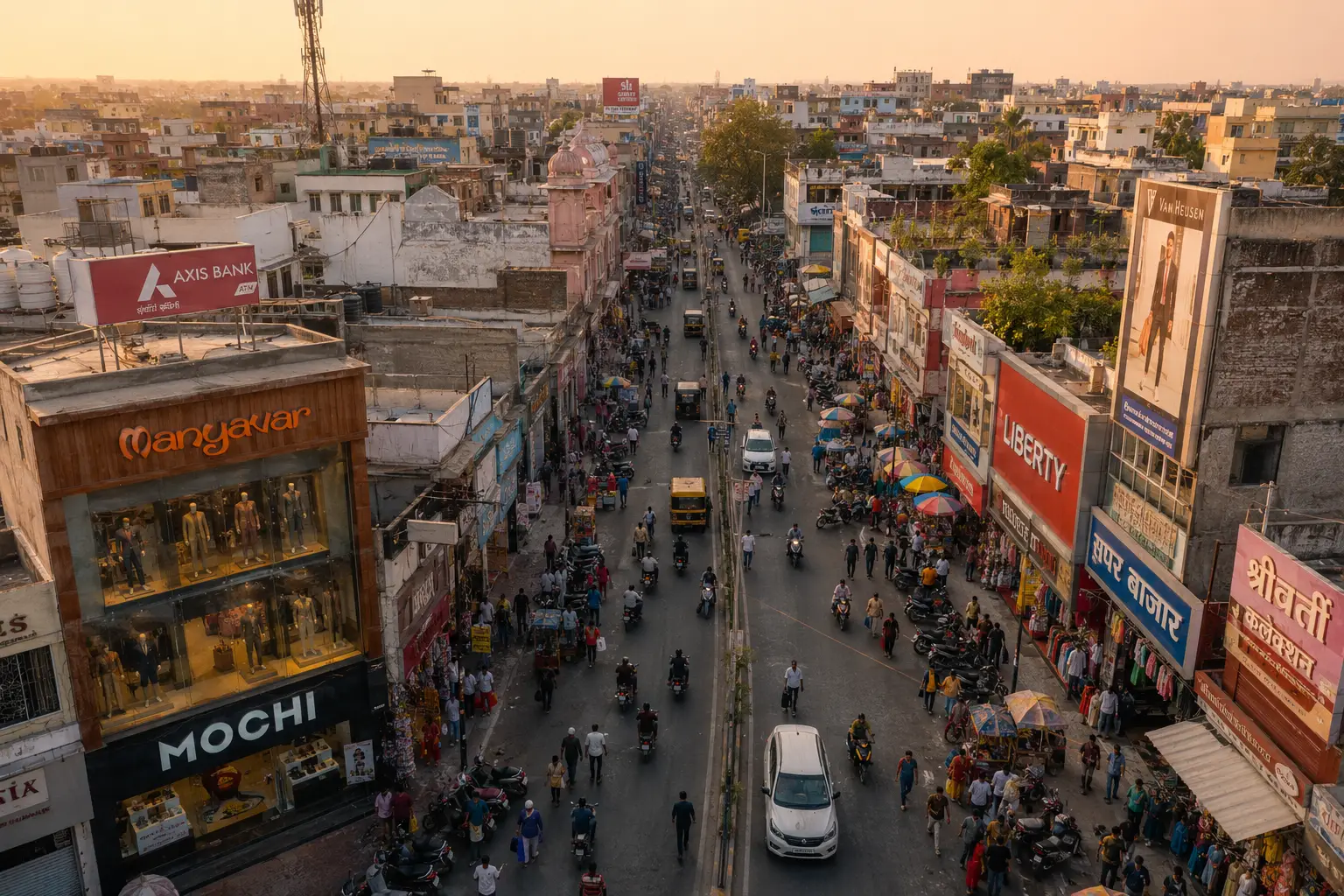
At the time, most D2C founders were doing exactly the opposite. Flush with funding and convinced that digital was the future, they were moving away from physical retail, not toward it. Lenskart's decision to open stores looked puzzling, even backward.
Fast forward to FY25, and Lenskart reported ₹6,652 crore in revenue, recording its first-ever full-year profitability. The strategy that raised eyebrows in 2015 was the engine behind it.
Here's the number that deserves more attention: during the first nine months of FY26, Lenskart's Tier 2 stores were generating an average monthly revenue of ₹1.2 lakh — higher than their Tier 1 stores at roughly ₹1.4 lakh, but with significantly lower rent, lower employee costs, and lower operational overheads.
As Peyush Bansal explained in an earnings call: there simply aren't enough professional opticians in Tier 2 cities. Less competition, genuine unmet demand, and lower costs. The math works differently there — and it works in the brand's favour.
This isn't a Mamaearth-Lenskart exception. It's an industry shift.
In October 2025, CBRE released a report on India's offline D2C revolution. The numbers told a clear story: D2C brands' share of retail leasing went from 8% in the first half of 2024 to 18% in the first half of 2025. That's more than double, in one year.
Where are these brands going? 46% are choosing high-street locations — lower rent, higher footfall visibility. 40% are entering malls. 14% are opening standalone stores.
The founders who are spending their budgets on Instagram reels while their competitors quietly sign retail leases will have an uncomfortable conversation with investors in two years. The question will be simple: where were you when the market shifted?
But here's what most founders get wrong about going offline
Opening a physical store doesn't mean renting out shelf space in an expensive mall and hoping that foot traffic converts. That approach didn't work in 2010. It won't work in 2026.
The brands winning in offline aren't just opening stores. They're thinking of each store as a hub that does four things simultaneously.
1. Customer acquisition that compounds online
Snitch's CMO put it simply: customers come into the store, experience the product quality firsthand, make a purchase — and then become online customers. The store doesn't just sell; it converts browsers into long-term repeat buyers across all channels.
The way Snitch measures this is instructive. They don't compare customer acquisition cost online versus rent offline in isolation. They look at a customer's blended acquisition cost and their lifetime value across both channels. By that measure, an offline store visit that costs ₹1,000 in rent allocation but produces a customer who spends ₹1 lakh over two years is an extraordinary investment. The Soul Store reports 70%+ in-store conversion rates, with average order values 1.5 times higher than online purchases.
2. Fulfilment that makes customers happier (and reduces returns)
An offline store in Rohini doesn't just serve walk-in customers. It can fulfil online orders placed by customers in the same neighbourhood — often within hours. This isn't theoretical; Snitch is already doing it, running dark store-style setups from existing locations.
Jio Mart pioneered this at scale using Reliance Retail's physical footprint. Croma did the same. D2C brands are now replicating it. The benefits stack up: faster delivery means happier customers, which means fewer returns, which means lower reverse logistics costs. Three wins from one infrastructure investment.
3. Returns that become relationships
Returns are where most D2C brands bleed money silently. The product ships. The customer doesn't like it. The product ships back. Two logistics bills, zero revenue.
A nearby offline store flips this entirely. The customer brings the return in person. Your team understands exactly what went wrong — wrong size, different expectation, quality concern. If it's a sizing issue, the right size is right there. The customer leaves with what they wanted. The return cost disappears. And often, they pick up something extra while they're in the store.
4. Content that you don't have to manufacture
Your store can be a content engine without extra budget. A photogenic fitting room produces selfies. An Instagram-ready wall produces tagged posts. A reel zone gives customers a reason to create content and tag your brand in exchange for a small discount or goodie. All of this reaches audiences your paid advertising never will, through voices that are more trusted than any brand-produced creative.
The social media problem nobody wants to admit
Scroll through the Instagram of any mid-sized D2C brand right now. Count how many posts are just product photos with a discount code. 30% off. Limited time. Buy now. Swipe up.
Brands that constantly run discounts train their customers to wait for the next sale. These customers never pay full price. They never truly believe in the brand. And they leave the moment a competitor offers a better deal.
Snitch's marketing head said something quietly important in a December 2025 interview: polished brand films — the expensive, actor-led, studio-produced kind — are traveling less and less. A founder talking to a camera in normal clothes, without a script, about something that actually happened in the business that day? That outperforms it. Every time.
The formats that work in 2026 are honest, and they're specific:
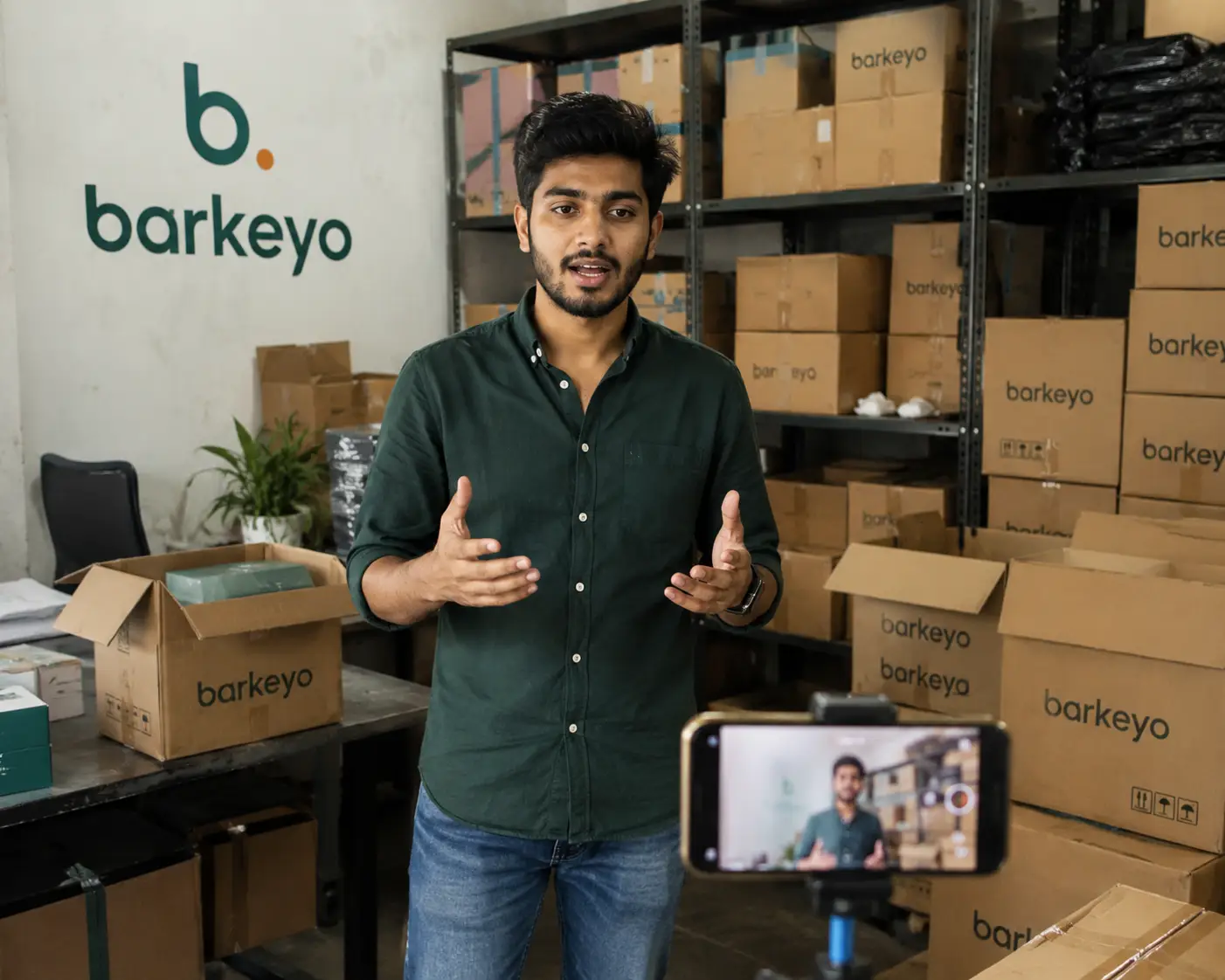
- Founder POV videos — unscripted, direct-to-camera, talking about real problems, real mistakes, real wins. Cloud kitchen founders have been doing this for years. D2C brands are only just catching on.
- Process walkthroughs — showing the manufacturing setup, how a product is made, how it's packed, how it gets to the customer. Authenticity that no ad agency can manufacture.
- Educational content — Minimalist's playbook. If you sell skincare, don't sell the product; explain the ingredient. Bring in dermatologists. Help your audience understand what they're putting on their skin. The product sells itself when trust is built first.
- Real customer documentation — Long-term users with before-and-after journeys. A fitness brand following one customer's 90-day transformation, told weekly, creates more loyal viewers than any campaign creative.
Mintifi's approach through Wint Wealth is a masterclass in this. Their content is entirely about retirement, financial independence, and early exits from corporate life — not about their product. But the audience that watches it is precisely the audience that buys their product. When the product does appear, it doesn't feel like an ad. It feels like a natural recommendation from a trusted source.
The ratio to aim for: 90% of your social content should add genuine value to your audience's life, with no sell attached. The remaining 10% can be promotional — and it will perform far better because of the trust the other 90% built.
The three paths forward — and the one that's quietly dangerous
Every D2C founder is sitting at one of three junctions right now.
Building to exit: If you're building a brand to sell it, this is actually a smart time to be doing exactly that. Consolidation is accelerating. Large legacy brands are acquiring D2C companies to modernise their portfolios quickly. The Minimalist's exit — built in four years in one of India's most crowded categories, sold for between ₹500 crore and ₹3,000 crore — is the benchmark everyone is chasing. If this is your goal, your whole strategy should be built around making the brand attractive to acquirers.
Building to scale: The good news here is that legacy brands are slow. They don't understand modern consumers, they can't move quickly, and they haven't figured out the content era yet. A data-driven, modern founder who moves fast still has a real window to build something that threatens the incumbents. The window won't stay open forever, but it's open now.
Comfortably plateaued: This is the dangerous position — and it's where many founders don't realise they are. ₹30–40 crore in annual revenue, decent profit, good lifestyle, no investor pressure. It feels stable. But a competitor — probably one you haven't noticed yet — is moving into your Tier 2 markets, building offline presence, and compounding